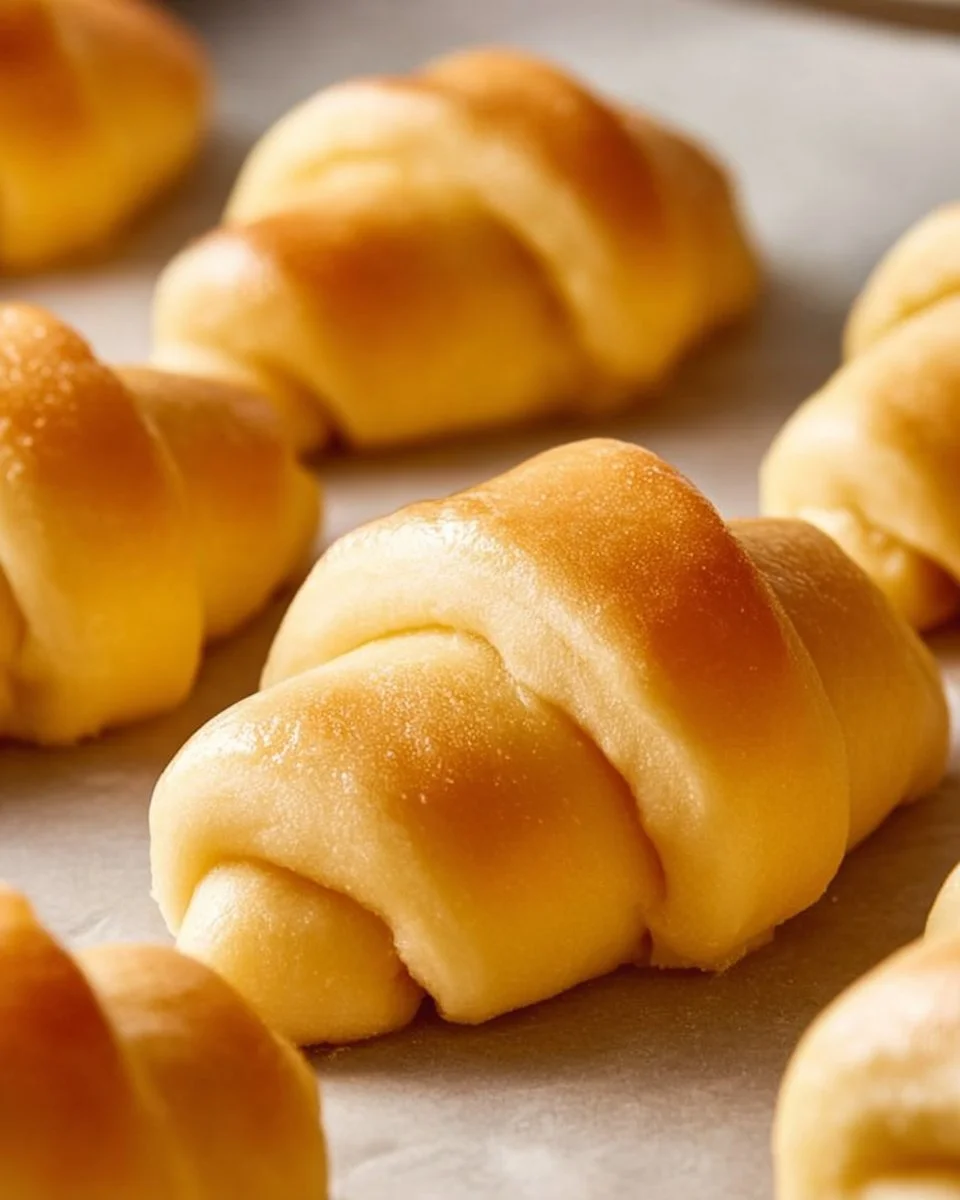
Homemade Buttery Golden Crescent Rolls
What Makes Homemade Buttery Golden Crescent Rolls Special
Homemade Buttery Golden Crescent Rolls are a classic comfort bread with a flaky outside and a soft, pillowy inside. The aroma of warm butter and freshly baked dough fills the kitchen as they bake. The crescent shape gives each roll a crisp, golden edge and a tender center that melts in your mouth. People love these rolls for their rich flavor, simple ingredients, and the way they elevate any meal—from weeknight dinners to holiday feasts.
This recipe traces its spirit to European enriched breads. While not a strict historical replica, it borrows the buttery, slightly sweet profile of brioche-style doughs and the quick, approachable method of home baker staples. The result is a hybrid: buttery richness with an easy method anyone can follow. The texture balances a light crumb and a soft chew, while the aroma of browned butter and yeast is irresistible.
If you enjoy crescent treats, you might also like the twist on sweet fillings like premium pecan pie crescent rolls. This easy Homemade Buttery Golden Crescent Rolls version is gentle on time and ingredients. It makes the simple Homemade Buttery Golden Crescent Rolls many home cooks search for: flaky on the outside, tender inside, and richly buttery all the way through. Try it and you’ll see why it’s often called the best Homemade Buttery Golden Crescent Rolls recipe by friends and family.
Why This Recipe is Perfect
- Quick and easy: Ready in about 2 hours from start to finish, including rises.
- Pantry-friendly: Uses basic staples—flour, sugar, salt, yeast, milk, butter, water, and egg.
- Budget-friendly: Economical ingredients deliver bakery-style results.
- Beginner-friendly: Simple steps and forgiving dough.
- Family-approved: Kids and adults love the sweet-buttery flavor and soft texture.
- Consistent results: Clear visual cues help you avoid mistakes.
- Versatile: Works as a sweet breakfast roll or a savory dinner side.
This version beats many online recipes because it balances time and texture. The dough rises twice for good lift without long fermentations. The ingredient list is tight and clear. The instructions focus on sensory cues—what the dough should look and feel like—so even new bakers get excellent results.
How to Make Homemade Buttery Golden Crescent Rolls
This overview explains the logic behind each major step so you can bake with confidence.
- Activate the yeast. Dissolving yeast in warm milk wakes the yeast and proves it’s active. You see froth when it’s ready.
- Mix dry ingredients. Sugar and salt distribute evenly through the flour and control fermentation and flavor.
- Combine wet and dry. The melted butter, egg, and water hydrate the flour and form the dough structure.
- Knead briefly. Five minutes of kneading develops gluten enough for a soft, elastic crumb without making the dough tough.
- First rise. Let the dough double to build flavor and lift.
- Shape. Rolling into a circle and cutting triangles yields classic crescents and even baking.
- Second rise. A short proof after shaping gives extra loft and a tender interior.
- Bake to golden. 375°F for 15–20 minutes browns the exterior while keeping the inside soft.
Tip: Look for a glossy, slightly tacky dough that springs back slowly when poked. If you want pairing ideas while baking, consider serving with a simple dessert like best homemade red velvet brownies for a decadent spread. This step-by-step plan explains why each move matters and how it affects flavor, texture, and appearance.
Ingredients
- 2 cups all-purpose flour
- 1/4 cup sugar
- 1 teaspoon salt
- 1 tablespoon active dry yeast
- 1/2 cup warm milk (about 105–115°F / 40–46°C)
- 1/4 cup unsalted butter, melted
- 1/4 cup water
- 1 egg
How to choose high-quality ingredients:
- Use fresh yeast or fresh active dry yeast for reliable rise.
- Choose good all-purpose flour—unbleached yields better flavor.
- Use unsalted butter to control salt, and melt it gently to avoid burning.
- Use whole eggs at room temperature for better emulsion and structure.
Substitutions for dietary restrictions:
- Dairy-free: Replace milk and butter with unsweetened plant milk (soy or oat) and vegan butter. This creates a vegetarian or vegan-friendly version with slightly different richness.
- Egg-free: Use a flax “egg” (1 tbsp ground flax + 3 tbsp water per egg) to bind—texture will be slightly denser.
- Whole grain option: Replace up to half the flour with whole wheat for more flavor and fiber; expect a chewier crumb. For savory-stuffed ideas, check a related savory roll guide like cabbage rolls.
Step-by-Step Directions
-
Dissolve the yeast.
- In a small bowl, pour warm milk and sprinkle the active dry yeast over it. Add a pinch of sugar from the measured amount.
- Visual cue: The liquid should become frothy and bubbly in 5–10 minutes.
- Smell: A pleasant yeasty aroma.
- Mistake to avoid: If milk is too hot, the yeast will die. Keep it warm, not hot.
-
Combine dry ingredients.
- In a large bowl, whisk flour, sugar, and salt together until even.
- Visual cue: No clumps of salt or sugar.
- Mistake to avoid: Don’t add yeast directly to salt; it can kill it.
-
Add wet ingredients.
- Make a well in the flour. Add melted butter, water, egg, and the frothy yeast mixture.
- Visual cue: A shaggy, slightly sticky mass forms.
- Smell: A mild buttery scent starting to emerge.
- Mistake to avoid: If butter is too hot it will cook the egg—let it cool slightly.
-
Mix and knead.
- Mix until a dough forms. Turn onto a lightly floured surface. Knead about 5 minutes until smooth and elastic.
- Visual cue: Smooth surface that stretches without tearing quickly.
- Sound: The dough becomes quieter as it tightens during kneading.
- Mistake to avoid: Over-kneading makes dense rolls. Stop once elastic.
-
First rise.
- Place dough in a lightly greased bowl. Cover and let rise in a warm place about 1 hour or until doubled.
- Visual cue: Dough roughly doubles, smooth top with slight doming.
- Smell: Slight fermentation, mildly sweet.
- Mistake to avoid: Underproofing leads to tight crumb; overproofing can collapse.
-
Shape the crescents.
- Roll dough into a large circle, about 12 inches or so. Cut into 8–12 triangles.
- Visual cue: Even triangles with wide bases and narrow tips.
- How to roll: Roll each triangle from the wide end toward the tip, stretching slightly for a tight roll.
- Mistake to avoid: If rolled too loosely, crescents unroll during baking.
-
Second rise.
- Place rolls on a baking sheet. Cover and let rise another 30 minutes.
- Visual cue: Rolls puff and look aerated.
- Mistake to avoid: Skip this rise and you’ll get flatter rolls.
-
Bake.
- Preheat oven to 375°F (190°C). Bake for 15–20 minutes until golden brown.
- Visual cue: Deep golden color on top and bottom. Tap bottom lightly; it should sound hollow.
- Smell: Buttery, toasty aroma.
- Mistake to avoid: Overbake and you’ll lose tender crumb.
-
Cool and finish.
- Remove from oven. Brush with a little melted butter if desired.
- Visual cue: Glossy finish and extra aroma when brushed.
- Mistake to avoid: Cutting too soon will compress the crumb.
How to Serve Homemade Buttery Golden Crescent Rolls
- Classic dinner side: Serve warm with roasted chicken, mashed potatoes, and green beans. A smear of herb butter makes them shine. 🧈
- Brunch option: Offer with jam, honey, or cream cheese alongside scrambled eggs. Fresh berries brighten the plate.
- Sandwich roll: Split and fill with ham and Swiss or smoked salmon and dill cream for a petite sandwich.
- Appetizer: Stuff with cheese and herbs before rolling for a gooey, pull-apart starter. Serve on a wooden board for rustic appeal.
Plating tip: Serve in a cloth-lined basket to keep them warm and add a sprinkle of flaky sea salt on top for contrast.
Storage and Reheating
Fridge storage:
- Store cooled rolls in an airtight container for up to 3 days.
- Reheat gently in a 300°F oven for 5–8 minutes to revive the crust.
Freezer storage:
- Freeze cooled rolls in a freezer bag for up to 3 months. Wrap tightly to prevent freezer burn.
- To reheat: Thaw at room temperature, then warm in a 325°F oven for 8–12 minutes.
Best reheating practice:
- For best texture, reheat from frozen wrapped in foil at 350°F for 15–18 minutes, then open the foil for 3 minutes to crisp the outside.
- Avoid microwave reheating for prolonged periods—it makes rolls chewy.
Pro Tips
- Use warm (not hot) milk for best yeast action.
- Melt butter slowly; browned butter adds a nutty depth.
- Measure flour by spooning into the cup and leveling—don’t pack.
- Keep kneading brief for soft crumb—5 minutes is ideal.
- Let shaped rolls rest; the second rise is essential for light texture.
- Brush with melted butter right after baking for extra shine and flavor.
- Add an egg wash (1 egg beaten with 1 tbsp water) for a deeper golden color.
Variations
- Spicy version: Add a pinch of cayenne and finely chopped jalapeños to the dough. Fill with pepper jack for a kick.
- Healthy version: Substitute half the flour with whole wheat and use olive oil instead of butter. Expect a denser, more rustic roll.
- Vegetarian/vegan option: Use plant milk, vegan butter, and a flax egg. This keeps the buttery flavor while making it vegan-friendly.
- Deluxe/gourmet upgrade: Brush with garlic-herb butter after baking and sprinkle with grated Parmesan. Add a sesame seed or poppy seed finish.
Frequently Asked Questions (FAQ)
How to prep ahead?
You can make the dough the night before. After the first rise, punch it down, cover tightly, and refrigerate overnight. Shape and allow the second rise in the morning, then bake. This develops flavor and saves morning time.
What if my dough doesn’t rise?
Check yeast freshness and liquid temperature. Water that’s too hot kills yeast; too cold slows it. The room should be warm—not cold. If the dough smells strongly of alcohol, it fermented too long.
Can I change baking time for different sizes?
Yes. Smaller rolls bake faster (12–15 minutes). Larger rolls may need 20–25 minutes. Look for deep golden color and a hollow sound when tapped.
What can I use if I don’t have active dry yeast?
Instant yeast works; reduce proofing time slightly and add it directly to dry ingredients. If using fresh yeast, use three times the weight of active dry yeast and proof as usual.
My rolls are dense. What went wrong?
Common causes: too much flour, under-kneading, or insufficient proofing. Use the visual cues—dough should be soft, slightly tacky, and elastic.
How to keep rolls soft for longer?
Store in an airtight container once cooled. A thin layer of softened butter inside the container helps retain moisture. Freeze any extras.
Final Thoughts
These Homemade Buttery Golden Crescent Rolls deliver warm, buttery comfort with a simple method. They are a reliable, family-approved choice for weeknight dinners and special gatherings. Save this recipe, share it with friends, and enjoy the golden, flaky results. If you try one variation, let it be brushing with herb butter right after baking—it elevates the flavor beautifully. 🥐
Conclusion
For more inspiration and a different take on buttery crescents, check this Buttery Golden Crescent Rolls Recipe – Mom On Timeout. If you want another classic homemade crescent reference, see this Homemade Crescent Rolls – Bread Recipes – Immaculate Bites.
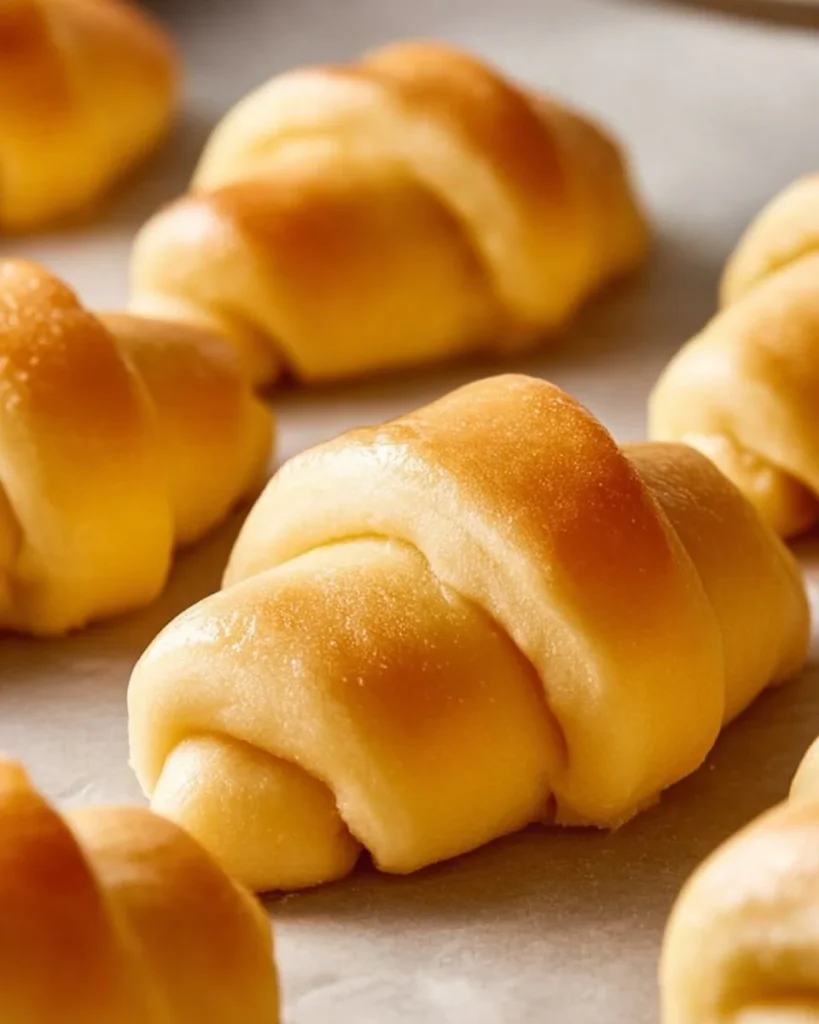
Homemade Buttery Golden Crescent Rolls
Ingredients
Method
- In a small bowl, pour warm milk and sprinkle the active dry yeast over it. Add a pinch of sugar from the measured amount. Wait for 5–10 minutes until frothy.
- In a large bowl, whisk together flour, sugar, and salt until even.
- Make a well in the flour. Add melted butter, water, egg, and the frothy yeast mixture.
- Mix until a dough forms. Turn onto a lightly floured surface and knead for about 5 minutes until smooth and elastic.
- Place dough in a lightly greased bowl, cover, and let rise in a warm place for about 1 hour or until doubled.
- Roll the dough into a large circle, cut into 8–12 triangles, and roll each triangle from the wide end toward the tip.
- Place rolls on a baking sheet, cover, and let rise for another 30 minutes.
- Preheat oven to 375°F (190°C). Bake for 15–20 minutes until golden brown.
- Remove from oven and optionally brush with melted butter.