Sheet Pan Pancakes
What Makes Sheet Pan Pancakes Special
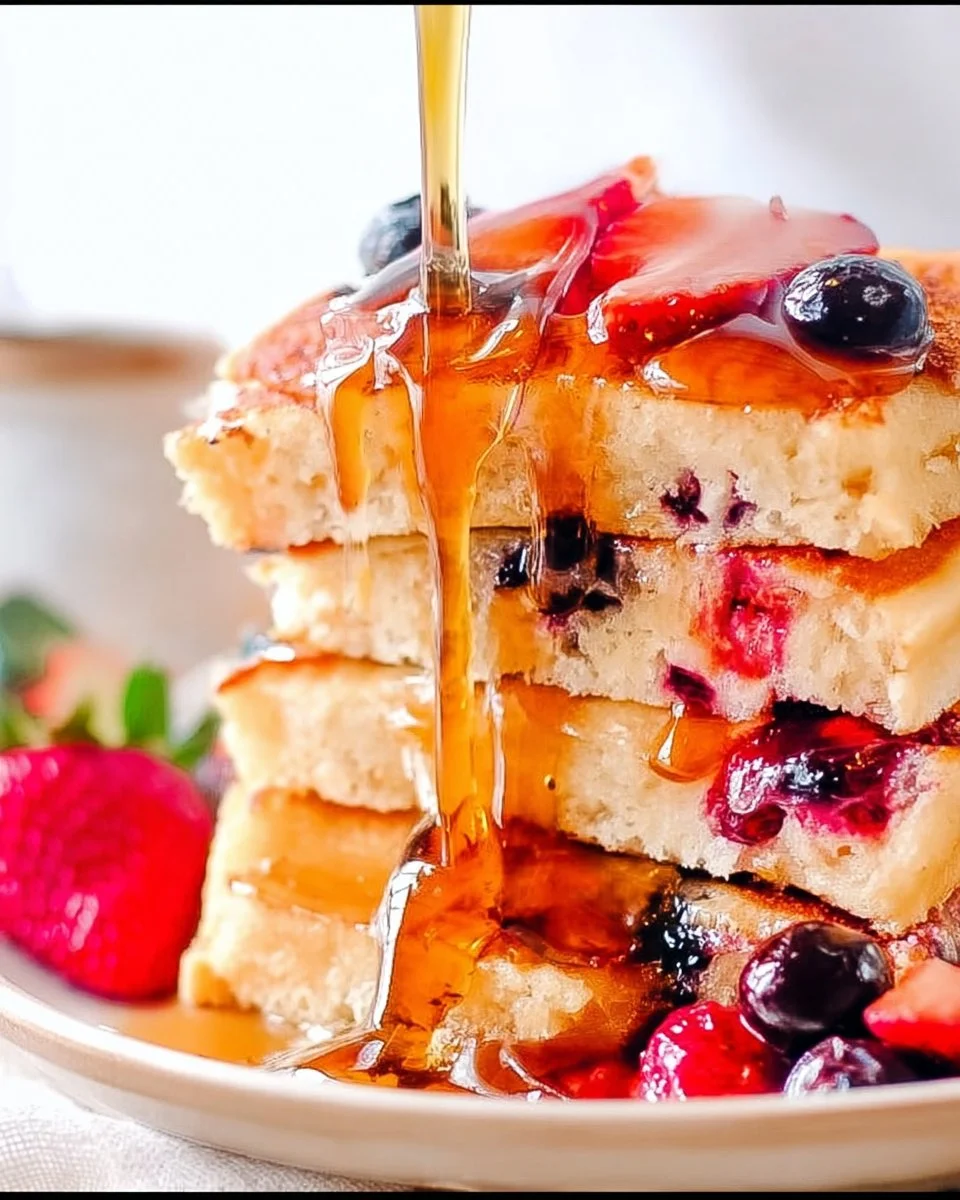
Sheet Pan Pancakes are a breakfast game-changer. Instead of flipping individual pancakes, you pour batter into a lined sheet pan and bake. The result is a tray of evenly cooked, golden pancakes you cut into squares. The aroma of warm vanilla, browned butter, and sweet batter fills the kitchen. Textures range from tender and fluffy in the center to slightly crisp at the edges. You get the best parts of a pancake stack without the babysitting.
This easy Sheet Pan Pancakes method traces its roots to simple one-pan and oven-baked batter traditions. Home cooks and busy families embraced it because it serves many people quickly. The flavors are familiar — sweet, buttery, with a hint of vanilla — but the presentation is modern and shareable. People love it for brunch gatherings, school mornings, or potlucks. It’s comforting, flexible, and visually appealing. Add berries, syrup, or a dusting of powdered sugar, and you have a crowd-pleasing spread.
If you enjoy fluffy pancakes but want to scale up, this homemade Sheet Pan Pancakes approach saves time and stress. For a different fluffy texture, you might also like these Japanese fluffy pancakes, which use a different technique but share the same goal: extra-airy batter. 🥞
Why This Recipe is Perfect
- Quick and easy: Bake a full sheet in about 20 minutes.
- Pantry-friendly: Uses common pantry staples.
- Budget-friendly: Feeds a crowd without specialty ingredients.
- Beginner-friendly: No flipping, less technique required.
- Family-approved: Kids love the squares; adults love the convenience.
- Consistent results: Oven baking gives even browning and texture.
Why this version is better than others: the balance of leavening (1 tablespoon baking powder), moderate sugar, and melted butter keeps the center fluffy and the edges slightly crisp. We use 425°F for a short, hot bake that puffs the batter and locks in moisture. This recipe avoids overmixing and excess liquid that can make baked pancakes gummy. It’s a simple Sheet Pan Pancakes recipe optimized for reliable texture and flavor.
How to Make Sheet Pan Pancakes
Overview: preheat the oven, mix dry and wet ingredients separately, combine gently, spread batter on a lined sheet pan, bake, cool slightly, then cut and serve. The logic: a hot oven gives immediate lift from baking powder. Separating dry and wet ingredients ensures even distribution of leavening and prevents lumps. Gently combining keeps the batter aerated. Spreading the batter in a shallow, even layer ensures uniform baking.
Step-by-step logic behind each part:
- Preheat hot (425°F): This creates steam quickly and activates baking powder for rise.
- Whisk dry mix: Even distribution of baking powder and salt prevents pockets of metallic taste or uneven rise.
- Combine wet mix: Melted butter adds richness and helps the batter set; eggs add structure and lift.
- Stir until just combined: Overmixing develops gluten and yields dense results.
- Bake briefly and hot: Short time prevents dryness while creating a golden top.
For more sheet-pan technique tips for other meals, try this sheet-pan chicken guide to see similar spreading and heat concepts in action: sheet pan chicken pitas with herby ranch.
Ingredients
- 2 cups all-purpose flour
- 2 tablespoons sugar
- 1 tablespoon baking powder
- 1/2 teaspoon salt
- 2 cups milk
- 4 large eggs
- 1/4 cup unsalted butter, melted
- 1 teaspoon vanilla extract
- Berries, syrup, and powdered sugar for serving
How to choose high-quality ingredients:
- Flour: Use fresh all-purpose flour from a sealed bag. Sift if lumpy.
- Milk: Whole milk gives richer flavor; 2% works fine.
- Eggs: Use large, room-temperature eggs for better rise.
- Butter: Unsalted, melted butter provides clean flavor and even distribution.
- Baking powder: Ensure it’s fresh (less than 6–12 months) for proper lift.
Substitutions:
- Dairy-free/vegan: Replace milk with unsweetened almond or oat milk, swap eggs for a commercial egg replacer or 1/4 cup applesauce per egg (texture will be slightly different), and use melted coconut oil instead of butter.
- Gluten-free: Use a 1:1 gluten-free flour blend formulated for baking. Add an extra 1/4 teaspoon xanthan gum if the blend lacks binder.
- Lower sugar: Reduce sugar to 1 tablespoon if you want less sweetness.
Step-by-Step Directions
-
Preheat and prep the pan
- Preheat your oven to 425°F (220°C). Line a 13×18-inch sheet pan with parchment paper.
- Visual cues: oven reaches full heat; parchment lies flat.
- Sound/smell: you may smell a faint warm oven scent.
- Mistake to avoid: don’t skip lining the pan — it makes releasing and cleanup easy.
-
Mix dry ingredients
- In a large bowl, whisk together flour, sugar, baking powder, and salt until uniform.
- Visual cues: no streaks of flour; mixture looks even.
- Mistake to avoid: measuring flour packed into the cup — spoon and level to avoid dense batter.
-
Mix wet ingredients
- In another bowl, whisk milk, eggs, melted butter, and vanilla until smooth.
- Visual cues: pale, slightly frothy mix; melted butter fully incorporated.
- Smell: a warm butter and vanilla scent.
- Mistake to avoid: adding hot butter to eggs — let butter cool slightly to avoid cooking eggs.
-
Combine gently
- Pour the wet ingredients into the dry and stir with a spatula until just combined. A few small lumps are fine.
- Visual cues: batter is smooth but not glassy. It should pour slowly.
- Mistake to avoid: overmixing. Overworkin g= tough pancakes.
-
Spread on the sheet pan
- Pour batter onto the prepared pan and spread it evenly to the edges with an offset spatula or back of a spoon.
- Visual cues: a uniform 1/2–3/4-inch layer across the pan.
- Mistake to avoid: uneven thickness — thin spots will brown too fast, thick spots may stay undercooked.
-
Bake until golden
- Bake 15–20 minutes, until the top is golden and a toothpick inserted into the center comes out clean. Edges should be slightly darker.
- Visual cues: even golden color, slight pull-away from parchment.
- Smell: warm, bready, buttery aroma.
- Mistake to avoid: opening the oven too often — it lowers temperature and affects rise.
-
Cool and cut
- Let the sheet pan cool 5 minutes, then slice into squares. Serve warm with berries, syrup, or powdered sugar.
- Visual cues: set center, easy to cut cleanly.
- Mistake to avoid: cutting immediately when piping-hot; it may crumble.
How to Serve Sheet Pan Pancakes
- Classic brunch board: Top squares with mixed berries, pats of butter, and warm maple syrup. Add a side of crispy bacon or sausage links for contrast.
- Sweet and creamy: Serve squares with whipped cream and a drizzle of berry coulis. Garnish with mint for color.
- Savory-sweet combo: Add a side of scrambled eggs and avocado slices. A sprinkle of flaky salt on the pancake squares brings out flavor.
- Kid-friendly bite-size: Cut into small squares and offer dipping sauces — syrup, chocolate sauce, or fruit yogurt. Pair with orange juice or milk for young kids.
Drink pairings: coffee, vanilla lattes, cold-brew coffee, hot chocolate, or freshly squeezed orange juice. For brunch parties, sparkling wine or a light mimosa complements the sweetness.
Plating tips: stack two or three squares, tilt slightly, and top with berries for height. Dust powdered sugar through a fine sieve for a professional look.
Storage and Reheating
Fridge: Store cooled pancakes in an airtight container for up to 3 days. Place parchment between layers to prevent sticking.
Freezer: Freeze individual squares on a tray for 1 hour, then transfer to a freezer bag for up to 2 months. This prevents clumping.
Reheating best practices:
- Oven/toaster oven: Preheat to 350°F (175°C). Heat for 6–8 minutes from refrigerated, 10–12 minutes from frozen, until warm and slightly crisp at the edges. This preserves texture best.
- Microwave: Microwave 20–30 seconds per serving from refrigerated. Be aware microwaving can make pancakes slightly softer.
- Skillet: Reheat briefly in a nonstick skillet over medium heat with a little butter to re-crisp the edges.
Pro Tips
- Room temperature eggs: they whisk easier and trap air better than cold eggs.
- Don’t overmix: stir until ingredients are combined; lumps are okay.
- Use an offset spatula to spread batter evenly for consistent thickness.
- Add mix-ins sparingly: scatter berries or chocolate chips on top of the batter to avoid sinking.
- Test for doneness with a toothpick — look for moist crumbs, not wet batter.
- Flavor booster: fold in a teaspoon of lemon zest for bright notes.
- For more fun breakfast ideas that kids love, check these breakfast pancake poppers for a portable twist.
Variations
- Spicy version: Add a pinch of cinnamon and cayenne, top with spiced maple syrup and sautéed apples for a sweet-heat profile.
- Healthy version: Swap half the flour for whole wheat flour, use 1% or plant-based milk, and add mashed banana or applesauce for natural sweetness. Expect a slightly denser texture.
- Vegan option: Use 2 cups plant milk, 4 flax eggs (1 tablespoon flaxseed + 3 tablespoons water per egg), and 1/4 cup coconut oil. Baking time is similar but test for doneness.
- Deluxe gourmet: Fold in lemon zest and ricotta for a tender crumb. Top with macerated berries and a drizzle of lemon glaze.
Frequently Asked Questions (FAQ)
Q: Can I halve or double this recipe?
A: Yes. Halve for a smaller pan or double for two sheet pans. Baking time may increase slightly for thicker layers; watch for a clean toothpick.
Q: My batter seemed thin. Will that affect baking time?
A: Slightly thinner batter may yield flatter pancakes and shorter bake time. For best results, aim for a pourable but not watery batter. Add a tablespoon of flour if too thin.
Q: Why did my baked pancakes come out dense?
A: Common causes: overmixing (develops gluten), old baking powder (lose lift), or measuring flour too compacted. Use fresh leavening and mix gently.
Q: Can I add fruit inside the batter?
A: Yes. Toss berries lightly in flour before folding into batter to prevent sinking. Large fruit pieces may increase bake time slightly.
Q: How do I reheat without losing crisp edges?
A: Use a toaster oven or skillet with a little butter. Microwaving will reheat quickly but may soften edges.
Q: Can I make this ahead for a brunch?
A: Yes. Bake the day before, cool, and store in the fridge. Reheat in a 350°F oven for 6–8 minutes before serving. For large crowds, bake multiple pans and keep warm in a low oven.
Q: What thickness should I spread the batter to?
A: Aim for about 1/2 to 3/4 inch thick for even baking. Thicker layers may need more time and risk a gummy center.
Final Thoughts
Sheet Pan Pancakes are a simple, satisfying way to serve a crowd with minimal fuss. This simple Sheet Pan Pancakes recipe gives reliable texture, warm flavors, and easy cleanup. Try toppings and variations to make it your own, then save or share this recipe for the next brunch or busy morning.
Conclusion
If you want a few more tested approaches to sheet-pan pancake-style breakfasts, see this practical Sheet Pan Pancakes – Budget Bytes walkthrough for ideas on mix-ins and crowd servings, or explore a health-conscious take at Sheet Pan Pancakes – Feel Good Foodie for more serving tips.
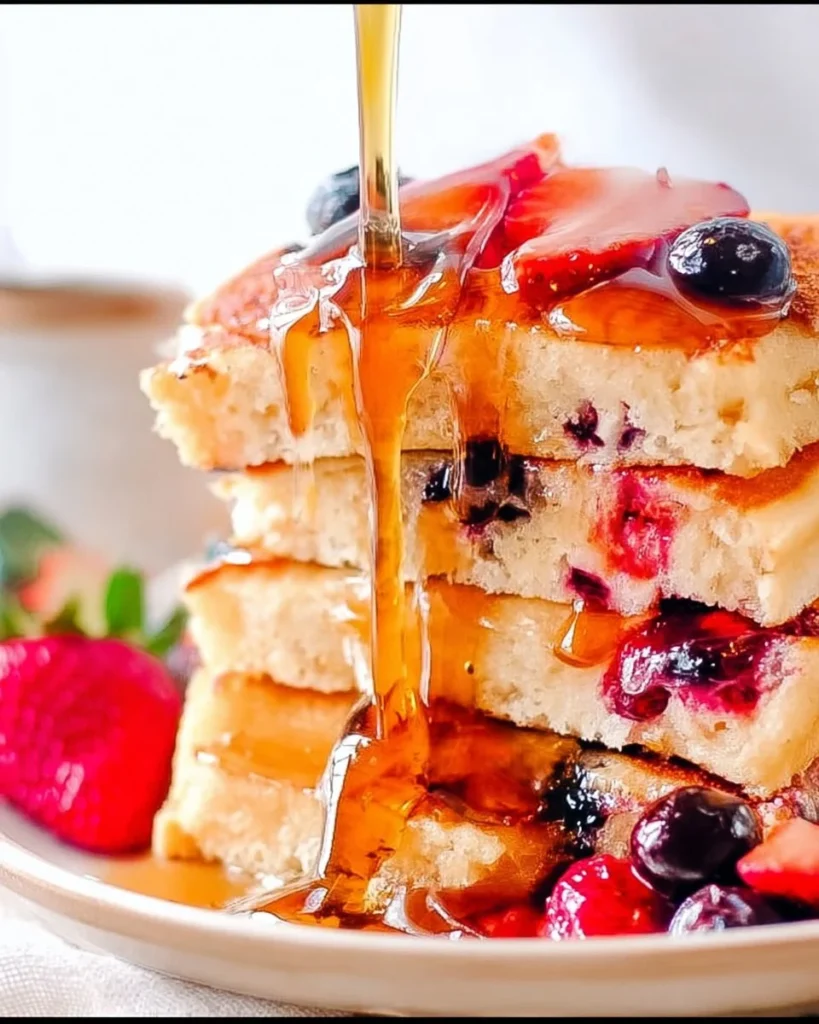
Sheet Pan Pancakes
Ingredients
Method
- Preheat your oven to 425°F (220°C) and line a 13x18-inch sheet pan with parchment paper.
- In a large bowl, whisk together flour, sugar, baking powder, and salt until uniform.
- In another bowl, whisk milk, eggs, melted butter, and vanilla until smooth.
- Pour the wet ingredients into the dry and stir with a spatula until just combined, with a few small lumps remaining.
- Pour batter onto the prepared pan and spread it evenly to the edges.
- Bake for 15–20 minutes, until the top is golden and a toothpick inserted into the center comes out clean.
- Let the sheet pan cool for 5 minutes, then slice into squares.
- Serve warm with berries, syrup, or powdered sugar.