Lemon Lavender Thumbprint Cookies
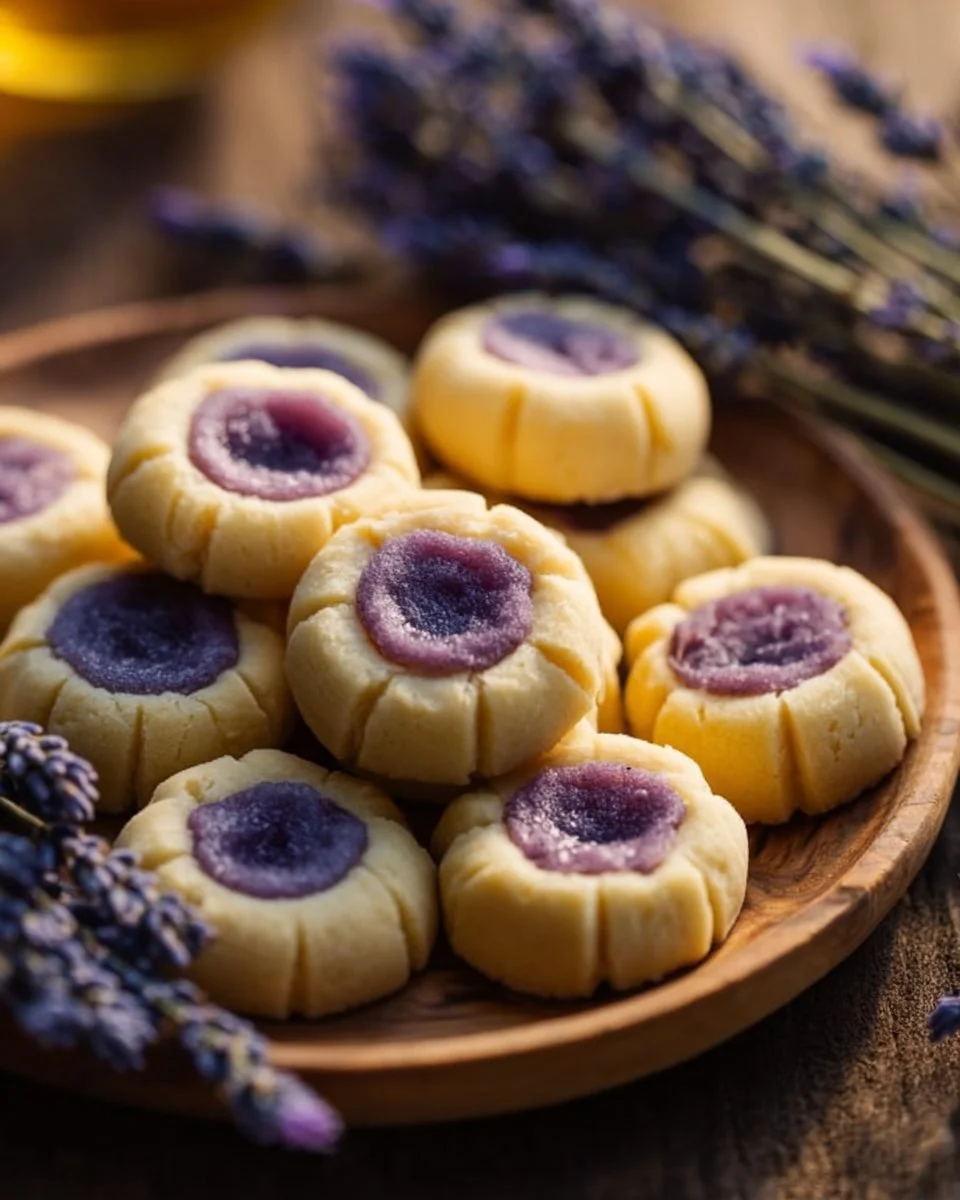
Lemon Lavender Thumbprint Cookies smell like bright lemons and soft flowers. The butter and sugar make a sweet, rich base. The lemon curd adds a glossy, tart center. The dried lavender gives a light, floral note that rises when you open the jar. The texture is soft at the center and a little crumbly at the edge. When you bite one, you get lemon, butter, and a small floral kiss. These cookies feel both old-fashioned and new. Thumbprint cookies go back many years as a simple home cookie. Bakers loved them because they are easy and pretty. The small well in each cookie lets you add jam or curd for color and flavor. This lemon-lavender version pairs bright citrus with subtle flowers. It feels like spring on a plate.
This recipe works for a small tea, a picnic, or a holiday tray. The dough is simple and does not need chilling for long. The cookies bake in one pan and look like gifts when you place them in a box. If you like lemon desserts, try a similar idea with raspberries in my chewy lemon raspberry cookies post for more lemon cookie ideas.
These cookies make your kitchen smell clean and bright. The lemon lifts the room, and the lavender adds calm. They taste like sunshine and are easy to share. Read on to learn why you should make them, step-by-step methods, and ways to change the flavor to fit your mood.
Why make this recipe
- Simple ingredients: You need pantry staples like flour, butter, and sugar plus a small amount of lavender and lemon curd. Most people already have these at home.
- Time-saving: You can make the dough and bake a sheet in about 30 minutes. No long chill time or complex steps.
- Great for beginners: The method is clear and forgiving. Rolling dough into balls and pressing with a thumb is easy to learn.
- Cost effective: You use small amounts of specialty items. A little dried lavender goes far, and store-bought lemon curd works well.
- Crowd-pleaser: The bright lemon and gentle lavender appeal to many tastes. They look nice on a cookie tray and pair well with tea or coffee.
- Versatile: You can swap fillings, add zest, or make gluten-free changes. This base works for many flavors and diets.
- Shelf-stable gifting: These cookies hold up well for a day or two in a tin, making them a good gift or bake sale choice.
This version stands out because it balances lemon and lavender without using too much flower flavor. It keeps the process simple so you can make many at once. The dough is rich and buttery, which helps the cookies feel like a classic treat rather than a diet dessert.
How to make Lemon Lavender Thumbprint Cookies
This section explains why each step matters and what you should aim for. We work in two main stages: make a soft, stable dough, then bake until edges set while centers stay soft. Creaming butter and sugar traps air. Those air pockets help the cookies rise a little and feel tender. Adding lemon juice to the creamed butter makes the dough fragrant and gives a small acid boost. This acid gently activates the butter’s flavor and can help the sugar dissolve.
Mixing dry ingredients separately ensures even spice and salt distribution. The dried lavender mixes with flour so the flower pieces do not clump or create big flavor spots. Gradual addition of flour prevents overworking the dough. Overmixing develops gluten, which makes cookies tough. Stop mixing when the dough looks smooth and holds shape.
Rolling dough into 1-inch balls makes uniform baking. The thumb indent creates a shallow well for the lemon curd. If you press too hard, the cookie will spread too thin and the curd may spill. If you press too little, the curd will sit on top and run. Fill with a small spoonful so the curd stays glossy after baking.
Bake until the edges are lightly golden. The center will stay pale; that keeps the cookie soft. Let cookies cool on the sheet for a few minutes to firm up, then move to a wire rack to stop cooking. For more lemon curd ideas and textures, see this guide on ultimate luscious lemon curd cookies.
Ingredients
- 1 1/2 tsp Culinary lavender, dried finely ground
- 1 tbsp Lemon juice
- 1/2 cup Lemon curd, store-bought or homemade
- 2 cups All-purpose flour
- 1/4 tsp Almond extract
- 1/2 cup Powdered sugar
- 1/4 tsp Salt
- 1 tsp Vanilla extract
- 1 cup Butter, unsalted
Choose the best quality items for brighter flavor. Use fresh lemon juice for the best lemon scent and taste. Buy culinary-grade lavender, not craft or bulk potpourri; culinary lavender is safe to eat and has a balanced, mild floral note. Use unsalted butter so you can control the salt level; it will give a cleaner butter taste. For powdered sugar, use a name-brand sifted sugar to avoid lumps.
Substitutions:
- Dairy-free: Swap butter for a firm plant-based butter at a 1:1 ratio. The texture will change a little, but it still works.
- Gluten-free: Use a 1:1 gluten-free baking flour blend that contains xanthan gum. The dough may feel softer.
- Sugar-free: Use powdered erythritol designed to bake with in place of powdered sugar, but expect a small change in texture.
If you want to pair these cookies with a savory dish, try the lemon-sauce idea found in this baked cod recipe for a dinner-and-dessert plan: baked cod with coconut lemon cream sauce.
Directions
-
Preheat the oven to 350°F (175°C).
- Set the rack in the middle. The oven must be hot before you bake. You will know it is ready when the oven display reaches 350°F. A steady heat gives even browning.
-
In a large bowl, cream together the unsalted butter and powdered sugar until light and fluffy.
- Use a hand mixer or stand mixer on medium speed for 2 to 3 minutes. The butter will turn paler and feel airy. When you stop the mixer, the mixture will hold soft peaks and look smooth. The sound will be quiet, not loud and grainy.
-
Mix in the vanilla extract, almond extract, and lemon juice.
- Add these liquids and mix on low until blended. The dough will smell floral and citrusy. The dough will look glossy and smooth.
-
In a separate bowl, combine the all-purpose flour, salt, and ground culinary lavender.
- Whisk these dry items for 20–30 seconds. The flour will look even and the lavender will be spread through. You want small lavender specks, not large clumps.
-
Gradually add the dry ingredients to the wet ingredients, mixing until fully incorporated.
- Add in two or three additions. Mix just until there are no dry streaks. Stop when the dough pulls away from the bowl and looks soft but not sticky. If dough feels crumbly, add a teaspoon of lemon juice or a pinch of water.
-
Roll the dough into 1-inch balls and place them on a baking sheet lined with parchment paper.
- Roll with your hands so each ball is smooth. Place balls about 2 inches apart. They will spread a little while baking.
-
Use your thumb to create an indentation in the center of each cookie.
- Press with your thumb or the back of a spoon. The indentation should be about 1/2 inch wide and not go all the way through. If the dough cracks, smooth the edges with your finger.
-
Fill each indentation with a small amount of lemon curd.
- Use a small spoon or piping bag. Fill so the curd sits just inside the well. Do not overfill; the curd may bubble and run if you add too much.
-
Bake for 12–15 minutes or until the edges are lightly golden.
- Watch edges for a pale gold color. The center will stay soft and pale. If you see dark brown spots, bake time was too long. Turn the pan halfway through if your oven runs hot.
-
Allow to cool on the baking sheet for a few minutes before transferring to a wire rack to cool completely.
- Let them sit for 3–5 minutes. The cookies will firm as they cool. Move them with a thin spatula to a rack so air can move under and around each cookie.
How to serve Lemon Lavender Thumbprint Cookies
- Tea party plate: Place cookies on a white plate with small sprigs of fresh lavender. Serve with Earl Grey or chamomile tea for a calm, floral match.
- Brunch tray: Add fresh berries and mini scones. Pour sparkling water with lemon slices for a light brunch pairing.
- Coffee pairing: Serve warm with a mild roast coffee or a latte. The butter and lemon pair well with coffee’s roasted notes.
- Dessert plate: Arrange three cookies with a small scoop of vanilla ice cream and a drizzle of warmed lemon curd for a fancy finish. Use a dusting of powdered sugar for a professional look.
To plate like a pro, space cookies evenly, use a clean white plate, and add one small edible flower or a thin lemon slice as a garnish.
How to store Lemon Lavender Thumbprint Cookies
Short-term (room temperature):
- Store in an airtight container at room temperature for up to 3 days. Place a sheet of parchment between layers to stop sticking.
Fridge:
- Store in an airtight container for up to 7 days. The curd will firm in the fridge but cookies may lose some crisp edge.
Freezer:
- Freeze unbaked dough balls on a tray until solid, about 1 hour. Transfer to a sealed bag for up to 3 months. To bake from frozen, add 2–3 minutes to bake time and press indent once more if needed before adding curd.
- To freeze baked cookies, place them in a single layer on a tray to freeze, then move to a freezer bag. They keep well up to 2 months.
Reheating:
- Reheat at 300°F (150°C) for 5–7 minutes to warm baked cookies. Watch closely so the curd does not bubble. For microwave, warm one cookie for 6–8 seconds on low power to avoid melting the curd.
Tips to make Lemon Lavender Thumbprint Cookies
- Use culinary-grade lavender: Too much or low-quality lavender tastes soapy. Measure precisely.
- Keep butter cool, not cold: Soft but cool butter creams best. If butter is too warm, the dough will be greasy.
- Don’t overmix flour: Stop when no dry streaks remain to keep cookies tender.
- Make uniform balls: Use a small cookie scoop for even size and even bake.
- Press gently: Make a thumbprint that is shallow and even; too deep makes thin cookies.
- Spoon curd after baking if you worry about run: Bake first, then add curd and cool for a brighter look.
- Test one batch: Bake two or three cookies to check oven time and adjust as needed.
Variation
- Lavender White Chocolate: Add 1/4 cup white chocolate chips to the dough and use raspberry jam instead of lemon curd for a sweet, creamy twist.
- Citrus Mix: Add 1 tsp lemon zest and 1 tsp orange zest to the dough. Use mixed citrus curd for more complex fruit notes.
- Almond-Lavender: Increase almond extract to 1/2 tsp and sprinkle chopped toasted almonds on top of the curd for crunch.
- Vegan version: Use plant-based butter and a vegan powdered sugar; use a vegan lemon curd or a jam made from lemon and sugar.
FAQs
Q: Can I use fresh lavender?
A: Use culinary-grade dried lavender for best control. Fresh lavender is more moist and stronger; you would need to reduce amount and chop finely.
Q: Why are my cookies too flat?
A: Butter may be too warm or you pressed indent too hard. Chill dough 15–20 minutes before shaping if this happens.
Q: Why is the lavender bitter or soapy?
A: Too much lavender or low-grade lavender can taste soapy. Stick to 1 1/2 tsp and buy culinary-grade lavender.
Q: Can I make these ahead of time?
A: Yes. You can freeze baked cookies for up to 2 months or freeze shaped unbaked dough balls and bake later. Add curd after baking if you prefer a fresher look.
Q: Can I use jam instead of lemon curd?
A: Yes. Use any jam you like. Jam will be less glossy and may set firmer when cooled.
Q: How do I stop curd from spilling?
A: Use a small spoon to limit the amount in each well and make sure the well is shallow. If curd runs, bake a few minutes less next time.
Q: My dough is crumbly. What now?
A: Add 1 teaspoon of lemon juice or water at a time until dough comes together. Chill 10 minutes if needed.
Conclusion
These lemon lavender thumbprint cookies make a lovely, simple treat for any gathering. For another take on lemon and lavender in a curd cookie, see this version from Emily Fabulous at Lavender Lemon Curd Cookies | EmilyFabulous. For more inspiration on lemon-lavender thumbprint ideas and tips, check Sheri Silver’s detailed post at lemon lavender thumbprint cookies – Sheri Silver.

Lemon Lavender Thumbprint Cookies
Ingredients
Method
- Preheat the oven to 350°F (175°C) and set the rack in the middle.
- In a large bowl, cream together the unsalted butter and powdered sugar until light and fluffy using a hand or stand mixer on medium speed for 2 to 3 minutes.
- Mix in the vanilla extract, almond extract, and lemon juice until blended.
- In a separate bowl, combine the all-purpose flour, salt, and ground culinary lavender, whisking for 20-30 seconds.
- Gradually add the dry ingredients to the wet ingredients, mixing until fully incorporated.
- Roll the dough into 1-inch balls and place them on a baking sheet lined with parchment paper.
- Use your thumb to create an indentation in the center of each cookie.
- Fill each indentation with a small amount of lemon curd, ensuring not to overfill.
- Bake for 12-15 minutes or until the edges are lightly golden; the centers should remain pale.
- Allow to cool on the baking sheet for a few minutes before transferring to a wire rack to cool completely.