Homemade Jelly Donuts
What Makes Homemade Jelly Donuts Special
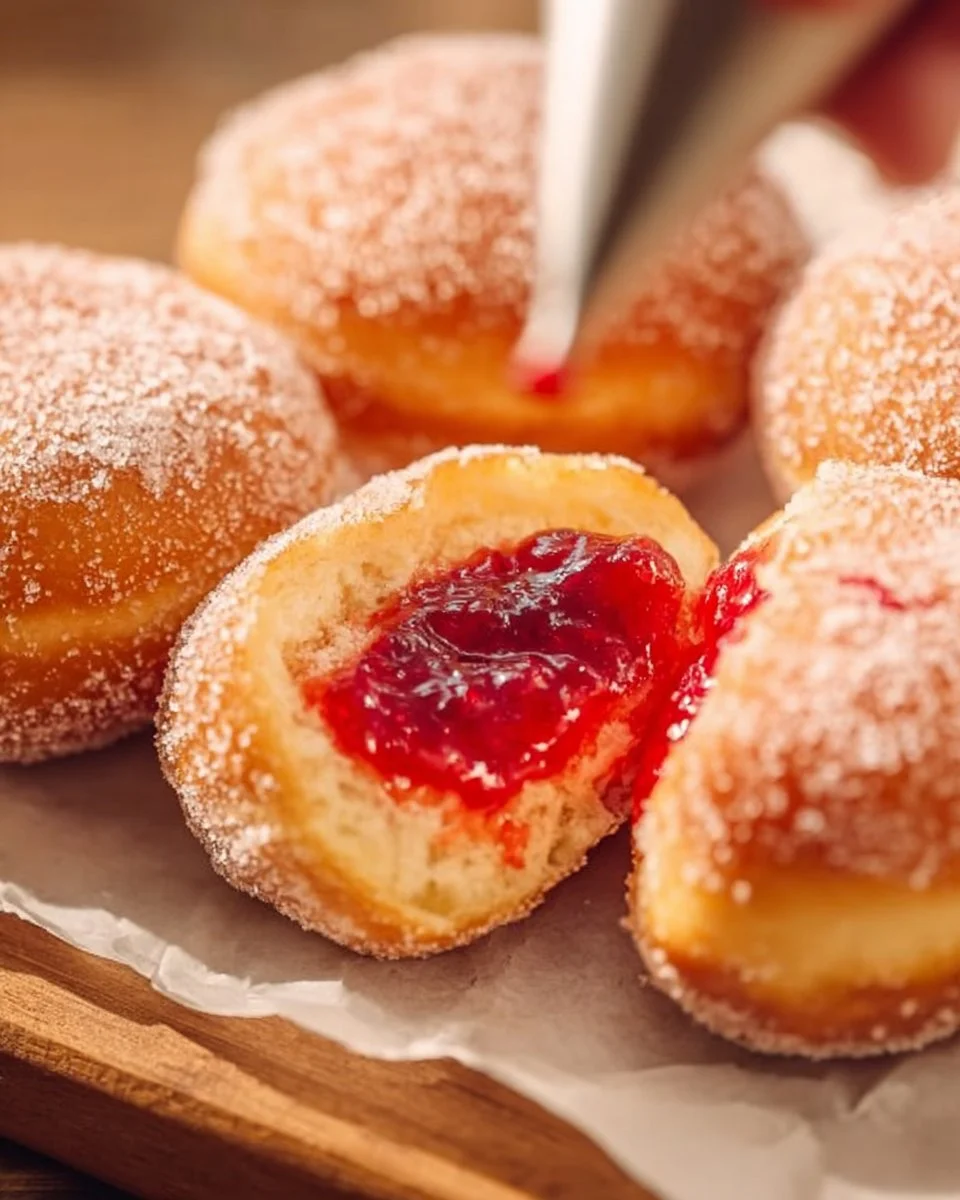
Homemade Jelly Donuts bring the warm scent of fresh fried dough into your kitchen. These donuts are soft on the inside and lightly crisp outside. Each bite bursts with sweet jam. The texture contrast—pillowy interior and golden crust—makes them irresistible. The aroma of frying butter and jam fills the air. Flavors can vary with your jam choice: strawberry brightens the taste, raspberry adds tartness, and apricot gives a gentle floral note. 🍩
This easy Homemade Jelly Donuts recipe feels old-fashioned. It borrows from classic European filled doughnuts and home bakery traditions. People love the nostalgia. They remember fairs, weekend breakfasts, or a family kitchen. The process is simple, so anyone can learn how to make Homemade Jelly Donuts at home. Beginners enjoy clear steps. Kids love helping shape and fill the donuts. You can customize fillings and coatings to match any season or mood. For a fruity match, serve with a light dessert like a fresh cake—try this homemade strawberry cake for a summer table pairing. The result is a crowd-pleaser. Soft, sweet, and shareable—what’s not to love?
Why This Recipe is Perfect
- Quick and easy: Uses basic yeast and pantry staples.
- Pantry-friendly: No exotic ingredients required.
- Budget-friendly: Economical flour, sugar, and jam.
- Beginner-friendly: Clear steps guide you from proofing to frying.
- Family-approved: Kids and adults both enjoy the flavor.
- Consistent results: Proven dough texture and frying method.
This version is better than many online because it focuses on clear visual cues, smells, and common mistakes. It balances richness with lightness by using moderate butter and eggs. The frying temperature and dough thickness aim to deliver a perfect interior crumb. It reads like the best Homemade Jelly Donuts recipe yet—simple, reliable, and easy to scale.
How to Make Homemade Jelly Donuts
Overview: You make a soft yeast dough, let it rise, cut rounds, fry until golden, fill with jam, and roll in sugar. Each step has a reason. Proofing the yeast ensures rise and flavor. Kneading develops gluten for structure. Resting the dough relaxes it and gives lift. Frying at the right oil temperature makes a crisp shell and a fully cooked inside without excess oil.
Logic behind each step:
- Warm milk activates yeast. Too hot milk will kill it.
- Adding eggs and butter enriches the dough for a softer crumb.
- Kneading aligns gluten for strength. Over-kneading makes dense donuts.
- A single rise keeps the dough tender and light.
- Frying at 350°F (175°C) cooks the donut through while browning the outside quickly.
- Filling when slightly cooled prevents jam from turning runny.
Tips for perfect results: Use room-temperature eggs and warm (not hot) milk. Weigh or spoon flour for accuracy. Maintain steady oil temperature. Fill with thick jam for less leaking. Chill piping tip to make neat holes.
Ingredients
- 2 cups all-purpose flour
- 1/4 cup granulated sugar
- 1 packet (2 1/4 teaspoons) active dry yeast
- 1/2 teaspoon salt
- 1/2 cup milk, warmed
- 2 eggs
- 1/4 cup unsalted butter, melted
- Vegetable oil for frying
- Jam or jelly of choice (thick preferred)
- Granulated sugar for rolling
How to choose high-quality ingredients: Use fresh yeast (check the date) for reliable rise. Choose unsalted butter for control over salt. Pick jams with good fruit content for real flavor. Opt for a neutral oil with a high smoke point for frying.
Substitutions:
- Dairy-free: Replace milk with warm almond or oat milk and use vegan butter to make a simple Homemade Jelly Donuts recipe for dairy-free diets.
- Reduced sugar: Use low-sugar jam or a sugar substitute for the rolling sugar.
- Gluten-free: Substitute a tested 1:1 gluten-free flour blend and add xanthan gum as recommended on the blend label (results vary).
You can also pair these donuts with a savory soup for a full meal contrast—try a bowl like this homemade soup for a cozy combo.
Step-by-Step Directions
-
Proof the yeast. In a large bowl, mix warm milk (about 105–110°F), sugar, and yeast. Wait 5–10 minutes until frothy.
- Visual cue: Foam and bubbles on the surface.
- Smell: Slightly yeasty, sweet aroma.
- Mistake to avoid: If no foam, the yeast may be dead—start over.
-
Mix the dough. Add flour, salt, eggs, and melted butter to the yeast mix. Stir until a shaggy dough forms.
- Visual cue: Dough comes together and pulls from the sides.
- Sound: Slight slapping during mixing if using a stand mixer.
- Mistake to avoid: Too much flour makes dry dough; add sparingly.
-
Knead the dough. On a floured surface, knead about 5 minutes until smooth and elastic.
- Visual cue: Smooth surface and slight bounce when poked.
- Feel: Soft and slightly tacky, not sticky.
- Mistake to avoid: Over-kneading can make the dough tough.
-
First rise. Place dough in a greased bowl, cover, and let rise in a warm spot until doubled (about 1 hour).
- Visual cue: Dough volume doubles.
- Smell: Rich, slightly fermented scent.
- Mistake to avoid: Letting it overproof leads to collapse.
-
Shape the donuts. Punch down, roll to 1/2 inch thickness, and cut circles with a glass or cutter. No donut cutter is needed.
- Visual cue: Even thickness and neat edges.
- Mistake to avoid: Cutting too thick makes uneven frying.
-
Heat oil. Heat vegetable oil in a deep pan to 350°F (175°C). Use a thermometer.
- Visual cue: Oil moves smoothly and small bubbles form when a piece of dough is dropped.
- Mistake to avoid: Oil too hot browns outside before the center cooks.
-
Fry the donuts. Fry a few at a time until golden brown, flipping once. Drain on paper towels.
- Visual cue: Even golden color on both sides.
- Sound: Gentle sizzle, not violent popping.
- Mistake to avoid: Crowding the pan lowers oil temp and yields greasy donuts.
-
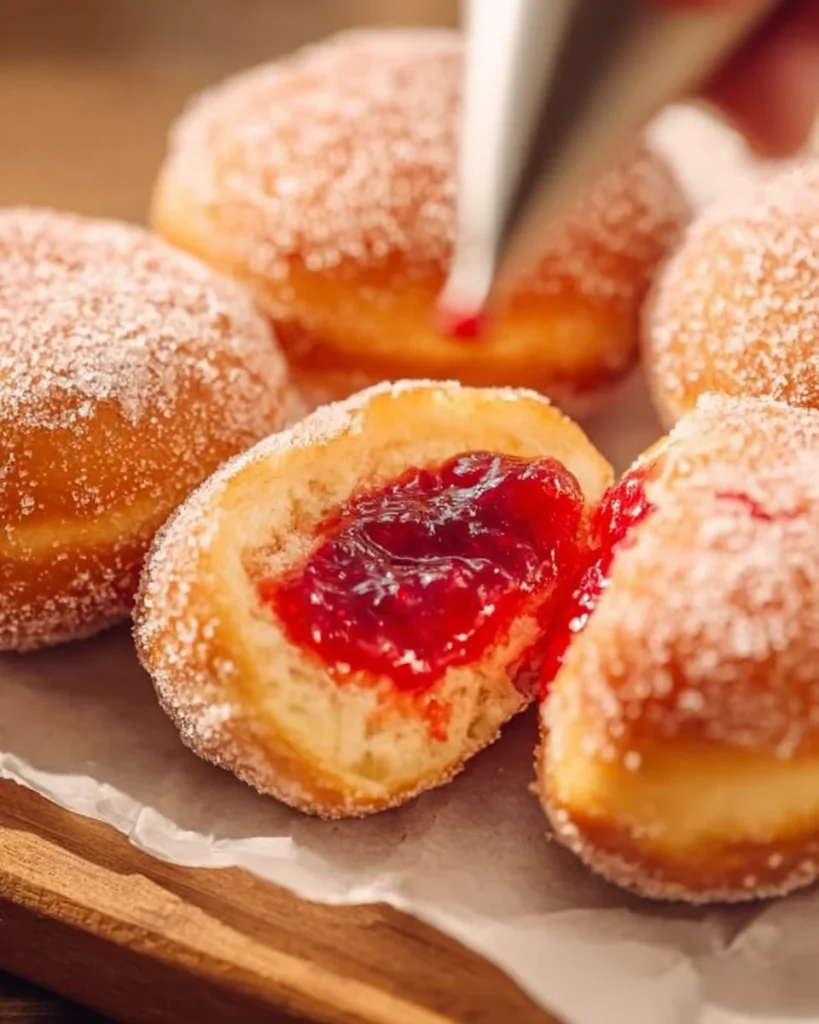
Fill the donuts. Once cool enough to handle, use a piping bag with a small tip to inject jam into each donut.
- Visual cue: Jam visible at the fill hole or some just beneath the surface.
- Mistake to avoid: Filling when hot will cause jam to melt and leak.
-
Roll in sugar. While still slightly warm, roll donuts in granulated sugar. Serve fresh.
- Visual cue: Even sugar coating that clings lightly.
- Smell: Warm, sugary aroma.
How to Serve Homemade Jelly Donuts
- Classic breakfast plate: Serve with fresh fruit (berries) and coffee.
- Brunch board: Add assorted pastries, cheeses, and sliced fruits for variety.
- Dessert pairing: Serve with a scoop of vanilla ice cream and a drizzle of warmed jam. 🍓
- Party platter: Dust with powdered sugar and arrange on a tiered stand for visual appeal.
Drink pairings: Black coffee, latte, hot chocolate, or a bright tea like Earl Grey. For adults, a sparkling wine can make a festive pairing.
Plating tips: Use doilies or parchment circles. Stack two donuts for height. Garnish with a small spoonful of jam on the side.
Storage and Reheating
Fridge: Store filled donuts in an airtight container for up to 2 days. The sugar will absorb some moisture.
Freezer: Freeze unfilled donuts in a single layer on a tray, then transfer to a sealed bag for up to 1 month. Thaw before filling. For filled donuts, freeze only if jam is well-set; consume within 2 weeks.
Reheating: Use a 325°F oven for 5–8 minutes to refresh texture. Avoid microwaving for long; it softens the crust too much. For a quick restore, warm for 30–60 seconds in a 90% power microwave then briefly toast in a skillet to crisp.
Pro Tips
- Use a kitchen thermometer for oil temperature. Accurate heat makes consistent donuts.
- Chill the piping tip slightly to make clean fill holes.
- Use thick jam or heated-and-reduced jam for less runny filling.
- Keep a small bowl of water to seal any dough edges if needed.
- Drain donuts on a wire rack over paper towels to avoid sogginess.
- Scale recipe easily: double ingredients to feed a crowd.
- Avoid overproofing; gently press the dough—if it springs back slowly, it’s ready.
For a flavor twist, brush the warm donut with melted butter before rolling in sugar to help the sugar stick.
You can learn related baking textures and tips in this best homemade red velvet brownies article which covers dough handling and heat control.
Variations
- Spicy version: Add a pinch of cinnamon and cayenne to the sugar for a subtle heat. Fill with spiced fig jam.
- Healthy version: Bake instead of fry at 375°F for 10–12 minutes and use whole wheat pastry flour. The texture will be lighter but still tasty.
- Vegan option: Use plant milk, vegan butter, and an egg replacer to make a homemade Homemade Jelly Donuts vegan-friendly. Temper your expectations: the crumb may be slightly different.
- Deluxe gourmet: Fill with lemon curd and top with whipped cream, or use quality fruit preserves and sprinkle with citrus zest for a premium touch.
Frequently Asked Questions (FAQ)
Q: How far ahead can I prep the dough?
A: You can make the dough and refrigerate it after the first rise for up to 24 hours. Chill slows yeast. Bring dough to room temperature before shaping and final rise.
Q: Why is my filling runny?
A: Runny filling often means jam is too thin or the donut was filled while very hot. Use thicker jam or reduce jam on the stove until it thickens. Fill when donuts are warm, not hot.
Q: Can I use instant yeast instead of active dry yeast?
A: Yes. Reduce proofing time slightly and follow instant yeast directions. Mix instant yeast directly with dry ingredients.
Q: How long should I fry the donuts?
A: Fry each side 1–2 minutes until golden. Total time depends on size. Use color as the cue rather than exact time.
Q: Can I bake these instead of frying?
A: Yes. Brush with melted butter and bake at 375°F for 10–12 minutes. They won’t have the same fried crust but will still be enjoyable.
Q: What if my dough is too sticky or too dry?
A: Add flour a tablespoon at a time if too sticky. If too dry, add warm milk a teaspoon at a time. Dough should be slightly tacky and elastic.
Q: How do I test oil temperature without a thermometer?
A: Drop a small piece of dough into the oil. It should sizzle immediately and rise slowly. If it browns too fast, lower heat; if it sinks, the oil is too cool.
Conclusion
Thanks for trying this simple Homemade Jelly Donuts recipe. For more classic techniques and a comparison to a scratch doughnut method, you can read the detailed guide at From Scratch Jelly-Filled Doughnuts – Bakers Royale. If you want ideas for different stuffed doughnut styles and gourmet fillings, see this helpful resource: Jelly Donuts – Chef Lindsey Farr.
If you liked this recipe, save it, share it, and try the variations. Happy frying and enjoy your homemade Homemade Jelly Donuts! 🍩
Homemade Jelly Donuts
Ingredients
Method
- In a large bowl, mix warm milk, sugar, and yeast. Wait 5–10 minutes until frothy.
- Add flour, salt, eggs, and melted butter to the yeast mix. Stir until a shaggy dough forms.
- On a floured surface, knead about 5 minutes until smooth and elastic.
- Place dough in a greased bowl, cover, and let rise in a warm spot until doubled, about 1 hour.
- Punch down, roll to 1/2 inch thickness, and cut circles with a glass or cutter.
- Heat vegetable oil in a deep pan to 350°F (175°C).
- Fry a few at a time until golden brown, flipping once. Drain on paper towels.
- Once cool enough to handle, use a piping bag with a small tip to inject jam into each donut.
- While still slightly warm, roll donuts in granulated sugar. Serve fresh.