
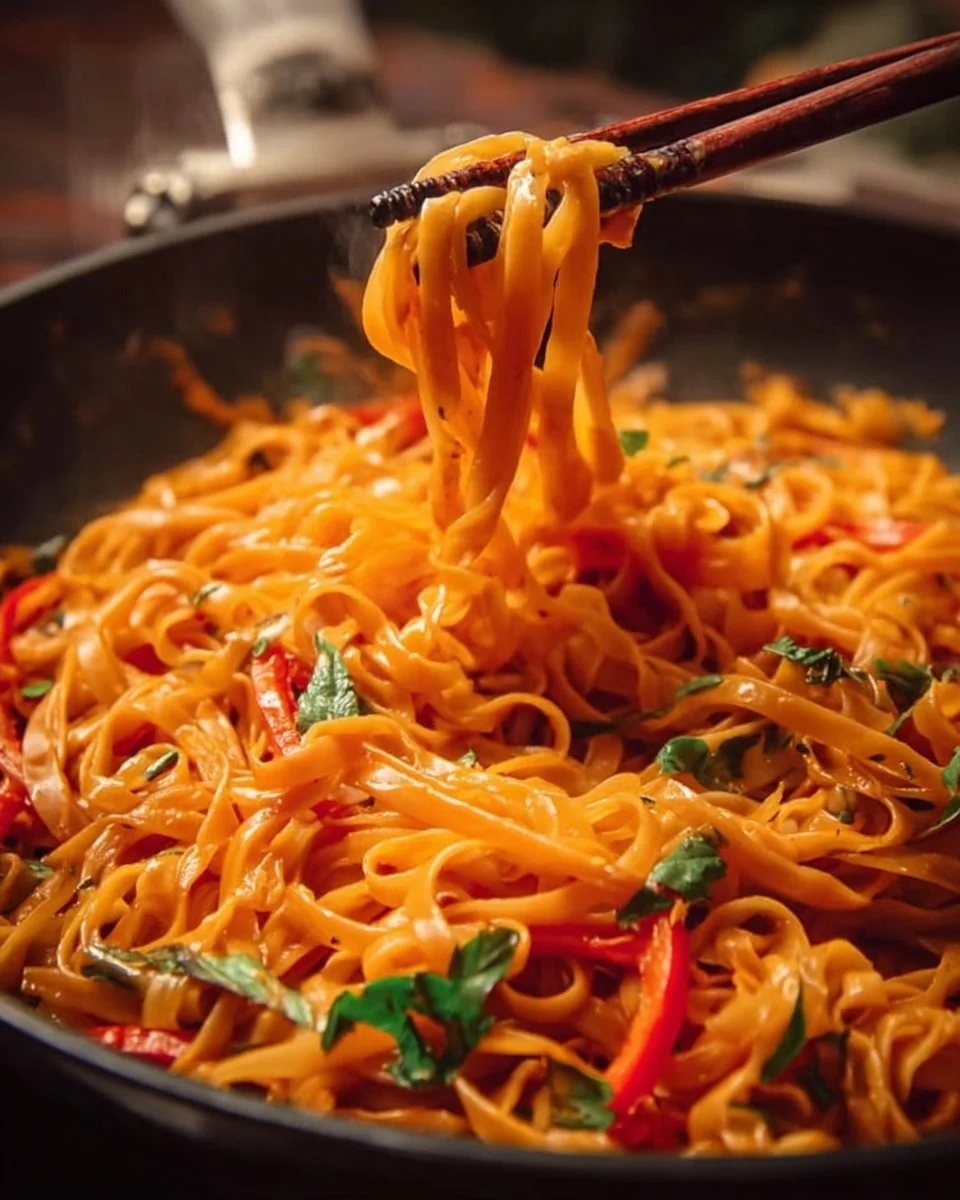
Easy Thai Red Curry Noodles
Easy Thai Red Curry Noodles
Easy Thai Red Curry Noodles bring bright Thai flavors to your dinner table fast. This dish blends smooth coconut milk, warm red curry, and soft rice noodles. It has a long path from Thailand to homes around the world. Thai curries come from a mix of local spices and coconut. Red curry paste uses dried red chilies, garlic, lemongrass, and shrimp paste in the classic recipe. Over time, cooks made a lighter, simpler version using store-bought paste and pantry items. That change made the dish quick and easy for busy kitchens.
When you cook this, the kitchen will smell spicy and sweet. You will notice red curry and coconut in the air. The noodles feel soft and slightly slippery. The vegetables stay bright and have a light snap. The coconut milk makes a smooth, creamy sauce that coats each noodle strand. The red paste gives a warm, spicy taste with a touch of sweet. Fresh basil on top adds a cool, herbal note.
This recipe is a classic favorite because it balances heat, cream, and fresh herbs. It is simple to make and works for weeknights or guests. If you like quick recipes like easy 2-ingredient protein bagels, you will love how fast this curry comes together. It makes people feel full and happy. The colors and smell make it exciting on the plate and on the table.
Why make this recipe
- Fast cooking: You can make it in about 20 minutes. It fits busy nights.
- Low cost: It uses simple, cheap ingredients like noodles and vegetables.
- Pantry-friendly: Red curry paste and coconut milk keep well, so you can cook anytime.
- Great for beginners: The steps are clear and forgiving. You cannot easily ruin it.
- Flexible: You can add protein or swap vegetables to match what you have.
- Crowd pleaser: The creamy, spicy sauce appeals to many tastes.
- Healthy options: You can use more vegetables for a lighter meal.
This version is better because it keeps steps simple and uses easy-to-find ingredients. It saves time by using pre-made curry paste and quick-cooking rice noodles. The method keeps vegetables bright and the sauce creamy without long simmering.
How to make Easy Thai Red Curry Noodles
This overview explains why we do each step. First, we cook rice noodles to the right softness. Rice noodles can turn mushy if overcooked, so aim for just tender. Next, we build flavor by sautéing onion and vegetables. Sautéing softens them and brings out their sweetness. When the curry paste hits hot oil and warm vegetables, it releases its oils and aroma. That step deepens the flavor quickly. Adding coconut milk after the paste helps blend the spice and creates a smooth sauce. Soy sauce brings salt and umami to balance the sweet coconut. Tossing noodles in the sauce lets each strand get coated so every bite tastes even.
The goal is to keep textures: noodles soft, vegetables slightly crisp, and sauce thick enough to coat. Heat control matters. Medium heat cooks vegetables without burning the paste. Simmering the sauce briefly helps the flavors join without breaking the coconut milk. Stir often to avoid sticking. In short: cook noodles carefully, build flavor in the pan, bloom the curry paste, then finish with coconut milk and noodles for a balanced, bright dish.
Note: For best texture, do not overcook noodles, and do not boil the coconut milk hard. Gentle simmering keeps the sauce creamy.
Ingredients
- 200g rice noodles
- 1 tablespoon vegetable oil
- 1 onion, sliced
- 2 bell peppers, sliced
- 1 cup broccoli florets
- 1 can (400ml) coconut milk
- 2–3 tablespoons red curry paste
- 2 tablespoons soy sauce
- Fresh basil leaves for garnish
- Salt to taste
Choose the best ingredients by looking for fresh, firm vegetables and a good brand of coconut milk and curry paste. Pick rice noodles that list only rice and water for the cleanest taste. For coconut milk, full-fat gives a rich sauce; light coconut milk works if you want less fat. For curry paste, read the label: some have fish or shrimp paste, which adds depth but is not vegetarian. If you need swaps: use tamari instead of soy sauce for gluten-free, use zucchini or snap peas instead of broccoli if you prefer, or use thin wheat noodles for a different texture. For a vegan swap when curry paste has shrimp paste, choose a vegan curry paste brand or make a quick paste with red chilies, garlic, and ginger.
Also see a sweet dessert idea to pair after this meal like red velvet blossom cookies for a simple finish.
Directions
- Cook the rice noodles according to the package instructions, then drain and set aside.
- Visual cues: The noodles should be soft but still springy. They will be opaque and slightly glossy. Do not let them fall apart or turn sticky. Rinse in warm water or quickly toss with a little oil to stop sticking. Drain well so the sauce will not become watery.
- In a large pan, heat the vegetable oil over medium heat. Add the sliced onion and sauté until translucent.
- Visual cues: The oil should shimmer but not smoke. The onion will go from white to a pale clear color. You will smell a mild sweet onion scent. Stir so the onion cooks evenly and does not brown too fast.
- Add the bell peppers and broccoli, cooking until the vegetables are tender.
- Visual cues: The peppers keep a bright red or green color and soften in about 3–5 minutes. Broccoli should turn a deeper green and you should be able to pierce a stalk with a fork but still feel some resistance. You want a little snap, not limp vegetables. Hear a soft sizzle when they hit the pan.
- Stir in the red curry paste and ensure the vegetables are well coated.
- Visual cues: The paste will darken slightly and stick to the vegetables. You will smell strong curry and chili oils. Stir for about 1 minute to let the spices bloom. If the paste sticks too hard, add a splash of coconut milk or a spoonful of water to loosen it.
- Pour in the coconut milk and soy sauce, bringing the mixture to a simmer.
- Visual cues: The sauce will change from thick paste to a smooth, pale orange or pink color. Small bubbles should form at the edge of the pan as it simmers gently. You will smell the curry and coconut blending. Taste and add soy sauce slowly so you do not over-salt.
- Add the cooked noodles and toss to combine. Season with salt to taste.
- Visual cues: The noodles will soak up the sauce and turn evenly coated. Use tongs to lift and toss so each strand has sauce. If the sauce looks too thin, simmer a minute to reduce. If it looks too thick, add a splash of water or reserved noodle water.
- Serve hot, garnished with fresh basil leaves.
- Visual cues: Fresh basil adds a bright green pop and a cool, minty scent. Serve immediately to keep noodles soft and vegetables crisp.
If you want a cozy soup feel or a side idea, this method links well with warming bowls like potato soup; try a simple recipe collection like easy potato soups for a different meal plan idea.
How to serve Easy Thai Red Curry Noodles
- Classic bowl: Pile noodles in a deep bowl, spoon sauce and vegetables over, top with torn basil leaves and a lime wedge. Serve with chopsticks and a soup spoon.
- With protein: Add grilled chicken, shrimp, or tofu on top. Place protein in the center and arrange noodles around it for a restaurant look.
- Side dishes: Pair with a simple cucumber salad to cool the heat, or serve with steamed jasmine rice for more substance.
- Drink pairings: Try a cold light beer, iced green tea, or a crisp white wine like Riesling to balance the spice. For a non-alcoholic option, coconut water or lime soda works well.
To plate like a pro, twist noodles around a fork to make a neat nest in the bowl, then add vegetables on one side and protein on the other. Finish with basil and a small drizzle of coconut milk for shine.
How to store Easy Thai Red Curry Noodles
Short-term (fridge): Cool the noodles to room temperature, then place in an airtight container. Store in the fridge for up to 3 days. Keep the sauce and noodles together; it will thicken in the cold but reheat well.
Long-term (freezer): Freeze in a freezer-safe container for up to 1 month. Use small portions so you only thaw what you need. Note: texture of vegetables may soften after freezing.
Best reheating method: Reheat gently on the stove with a splash of water or coconut milk. Use low to medium heat and stir often. For single servings, microwave in short bursts, stirring between each burst, and add a little water to prevent drying. Avoid high heat to keep the coconut milk from separating. If frozen, thaw overnight in the fridge before reheating.
Tips to make Easy Thai Red Curry Noodles
- Do not overcook rice noodles. They soften fast and can turn mushy. Test early.
- Bloom the curry paste in the pan for at least 30–60 seconds to release oil and flavor.
- Use full-fat coconut milk for a rich sauce. If you use light milk, add a small spoon of cream or coconut cream.
- Keep vegetables slightly undercooked; they will finish when the noodles are added.
- Taste as you go. Adjust curry, soy, and salt in small amounts.
- Add fresh basil at the end for bright aroma. Do not cook basil long, it will lose flavor.
- If the sauce is too thick, thin with warm water or reserved noodle water. If it is too thin, simmer gently to reduce.
Variation
- Make it Spicy: Add more red curry paste and a dash of chili flakes. Finish with sliced fresh chilies.
- The Healthy Version: Use light coconut milk, add extra greens like bok choy and spinach, and use whole-grain rice noodles if available.
- Deluxe Version: Add marinated shrimp or sliced beef, finish with chopped peanuts and a squeeze of lime for a richer texture and nutty crunch.
- Creamier Version: Stir in a tablespoon of peanut butter for a Thai-peanut twist.
- Vegetarian/Protein Boost: Add pan-fried tofu cubes or edamame for protein without meat.
FAQs
Q: Why is my sauce too thin?
A: Thin sauce means too much liquid or not enough paste. Simmer on medium-low to reduce the sauce a few minutes. You can also add a small spoon of coconut cream or a little cornstarch slurry (1 tsp cornstarch mixed with cold water) to thicken.
Q: Why did my noodles get sticky?
A: Overcooking or leaving noodles in hot water makes them sticky. Drain and rinse rice noodles under warm water, then toss with a little oil if you will not mix right away.
Q: Can I make this ahead of time?
A: Yes. Cook and cool fully, then store in the fridge for up to 3 days. Reheat gently with a splash of water or coconut milk. For best texture, do not freeze if you want crisp vegetables, but you can freeze if you accept softer veg after thawing.
Q: Can I use other vegetables?
A: Yes. Use carrots, snap peas, zucchini, or green beans. Adjust cook times so each vegetable gets the right texture.
Q: How can I make it less salty?
A: Use low-sodium soy sauce and taste before adding salt. Coconut milk and curry paste can add flavor, so add soy sauce slowly.
Q: What if my coconut milk splits?
A: High heat can make coconut milk split. Keep heat at medium-low and stir gently. If it splits, mixing in a little broth or cream can help bring it back together.
Q: Can I freeze leftovers?
A: Yes, freeze in small portions for up to 1 month. Expect softer vegetables after thawing.
Conclusion
You can find a similar home-style take on this dish in a clear, step-by-step guide at a Thai red curry noodles recipe from Eat With Clarity, and another quick one-pot version that shows fast cooking at a ready-in-20-minutes Thai red curry noodles post on Choosing Chia. These can offer extra ideas while you make your own easy, tasty bowl at home.
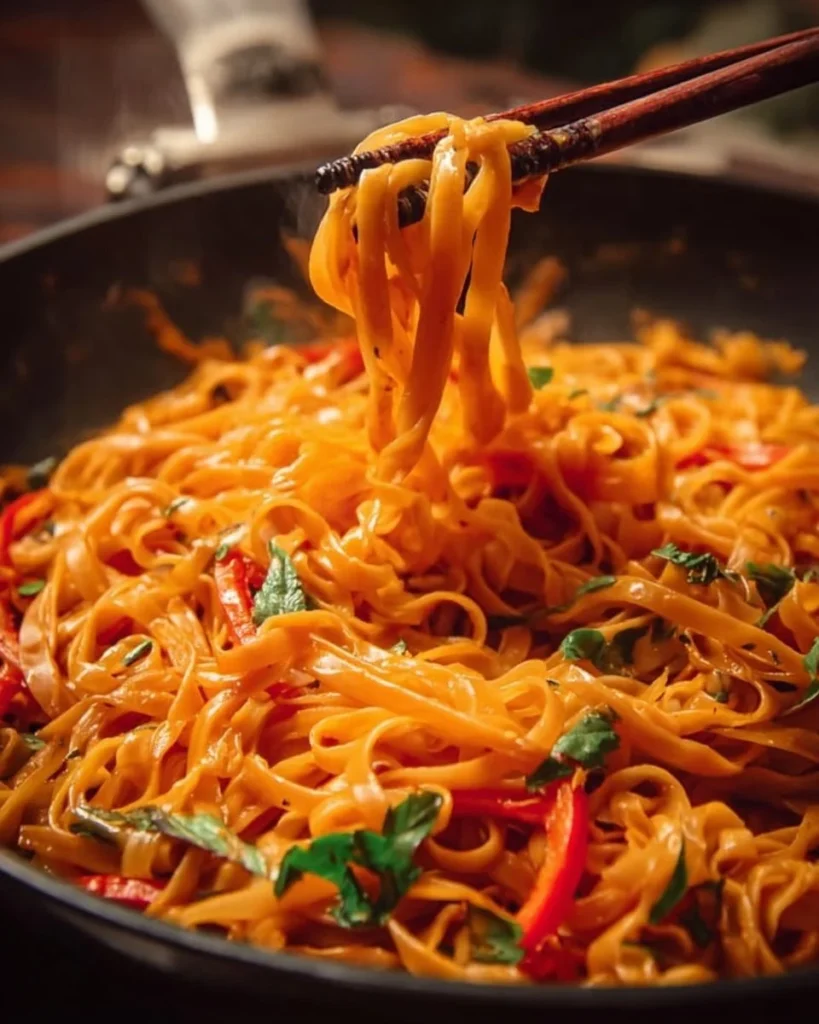
Easy Thai Red Curry Noodles
Ingredients
Method
- Cook the rice noodles according to the package instructions, then drain and set aside.
- Rinse in warm water or quickly toss with a little oil to stop sticking.
- In a large pan, heat the vegetable oil over medium heat.
- Add the sliced onion and sauté until translucent.
- Add the bell peppers and broccoli, cooking until the vegetables are tender.
- Stir in the red curry paste and ensure the vegetables are well coated.
- Pour in the coconut milk and soy sauce, bringing the mixture to a simmer.
- Add the cooked noodles and toss to combine.
- Season with salt to taste.
- Serve hot, garnished with fresh basil leaves.